How Automated Systems Ensure Labeling Compliance
How Automated Systems Ensure Labeling Compliance
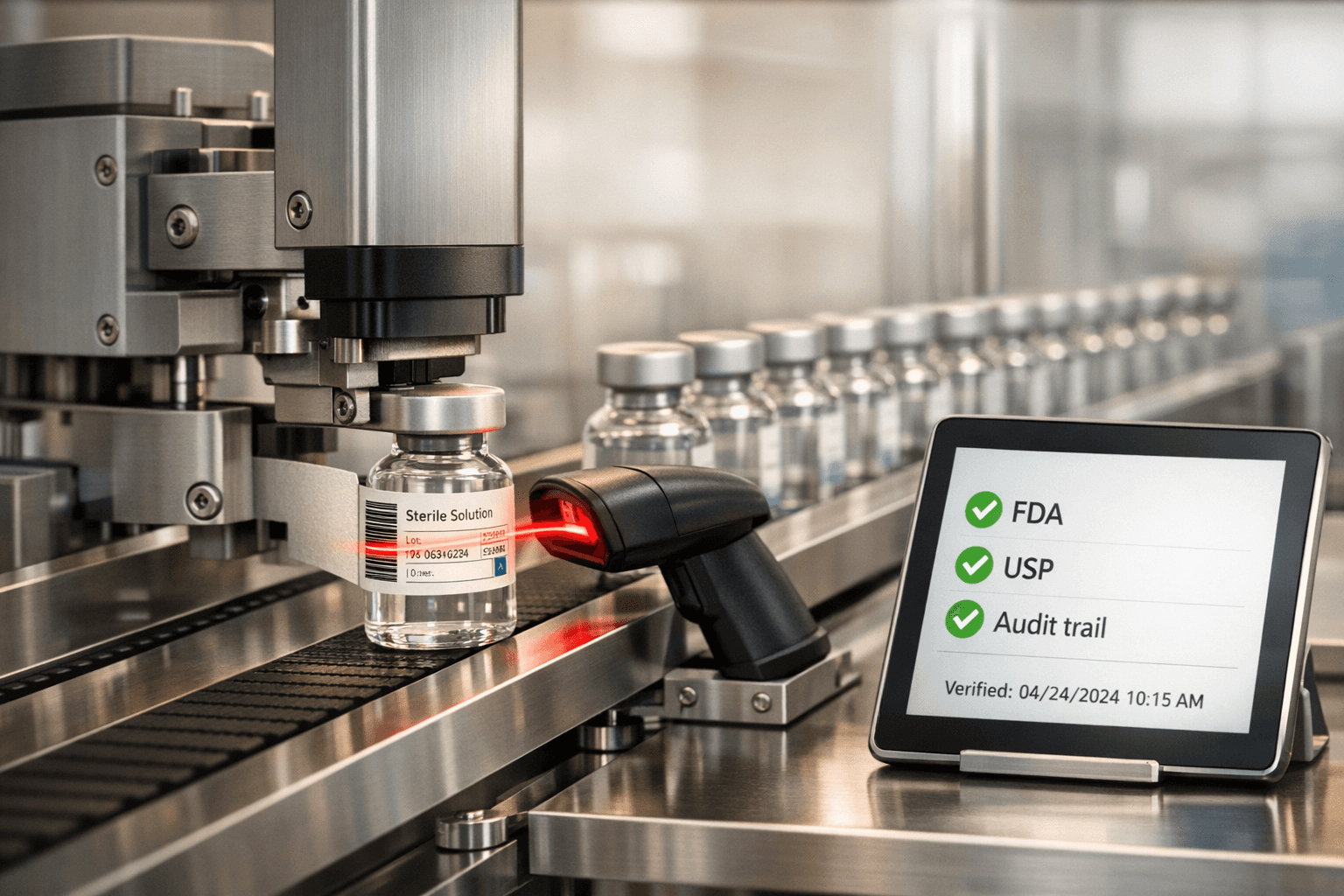
Automated labeling systems are transforming how pharmacies meet strict FDA and USP regulations. These systems reduce errors, improve compliance, and streamline workflows by pulling data directly from prescription management tools and using pre-set templates. This eliminates manual entry mistakes and ensures labels include all required details, such as drug strength, expiration dates, and lot numbers. For 503B facilities, they also simplify structured product reporting and barcode generation for supply chain tracking.
Key Points:
Labeling errors cause 33% of medication mistakes and 30% of related fatalities.
Manual processes often lead to outdated templates, version control issues, and compliance gaps.
Automation ensures accuracy through features like barcode verification, centralized data, and real-time error detection.
Systems comply with FDA and USP standards, including the use of SPL formats and updated labeling definitions.
Ensure Label Compliance and Barcode Quality With Integrated Label Inspection System
Regulatory Requirements for Pharmacy Labeling
Pharmacy labeling in the U.S. operates under strict federal and state regulations. At the federal level, the FDA establishes baseline requirements through specific statutory provisions. For example, 21 CFR 201.100(b) outlines prescription label requirements, while 21 CFR 201.17 and 21 CFR 201.18 address expiration date placement and the significance of lot numbers, respectively [3]. Under the Federal Food, Drug, and Cosmetic Act (FDCA), any product failing to meet these standards is considered "adulterated" or "misbranded" [8].
Labeling mistakes are a serious issue, contributing to 33% of medication errors and 30% of fatal outcomes [6]. To address this, the FDA mandates that the Principal Display Panel (PDP) - the first part of the label users see - must clearly include key details such as the proprietary name, established or proper name, dosage form, product strength, route of administration, warnings, and controlled substance schedule [5][6]. For 503B outsourcing facilities, an extra requirement includes submitting electronic drug product reports using Structured Product Labeling (SPL) formats [4].
The United States Pharmacopeia (USP) sets additional standards. USP General Chapter <7>, which became enforceable on September 1, 2023, introduces updated labeling definitions with a three-year implementation period [7][8]. One notable change is the shift to metric units for single-entity injectable products, such as labeling Epinephrine as "1 mg/mL" instead of "1:1000." This change aims to reduce errors linked to ratio labeling [7]. These precise standards highlight the importance of automation in reducing human error and ensuring compliance.
Required Labeling Elements
Labeling requirements differ depending on the product type, but all labels must include the National Drug Code (NDC), which serves as a unique identifier for U.S. medicinal products [2].
Label Type | Mandatory Elements |
|---|---|
Pre-packed/Unit-dose | Brand or generic name, expiration date, manufacturer, lot number (or internal code), drug strength [11] |
In-patient (Non-unit-dose) | Patient name/location, drug name/strength, route of administration, manufacturer/lot number, auxiliary labels, expiration date [11] |
Parenteral Admixture | Name/quantity/concentration of drug and solution, date/time of addition, expiration date, scheduled administration time, infusion rate, initials of both preparer and verifying pharmacist [11] |
Safety features are also critical. For example, "Tall Man Lettering" is used to distinguish look-alike drug names, and error-prone abbreviations like "μg" are replaced with safer alternatives such as "mcg" to avoid confusion with "mg" (milligram) [6]. Injectable product labels must leave part of the container visible, allowing healthcare providers to inspect for particles or discoloration [6].
Problems with Manual Labeling
Despite these clear requirements, manual labeling remains a weak link. Errors are more likely when patient names, drug strengths, or beyond-use dates are entered manually. This issue is compounded by regulatory complexities. FDA inspections of compounders frequently uncover deficiencies, such as inadequate sterile product procedures and failures in environmental monitoring - problems exacerbated by manual processes [10].
High turnover among pharmacy technicians adds to the challenge. In 2021, many health systems reported turnover rates of 21% or higher, creating further gaps in compliance [12]. State pharmacy boards introduce additional layers of complexity. While 503A pharmacies primarily answer to state boards, regulations differ significantly across states [10][12]. For example, some states permit 503A pharmacies to produce office stock, despite federal FDA guidance generally restricting this activity to 503B facilities [9]. This fragmented regulatory landscape complicates compliance efforts and contributes to the estimated 1.3 million annual medication errors in the U.S., many of which stem from unclear labeling and dosing information [7].
How Automated Labeling Systems Work
Automated labeling systems streamline the process of creating prescription labels by pulling data directly from prescription management tools and electronic health records. This eliminates the need for manual entry of critical details like patient names, drug strengths, and expiration dates. Instead, the system uses pre-set templates that align with federal and state regulations to generate labels. By automating this process, the risk of transcription errors - which can lead to inaccurate labeling - is significantly reduced.
At the core of these systems is the Standardized Numerical Identifier (SNI), which is essentially a serialized National Drug Code (sNDC). This identifier combines the traditional 10- or 11-digit NDC with a unique alphanumeric serial number, which can be up to 20 characters long. This setup ensures that every saleable unit has a distinct identity, making it possible to track billions of units without duplication across the supply chain [13].
Automation Features for Accuracy and Compliance
These systems come equipped with advanced features to ensure both precise labeling and compliance with regulations. For instance, they encode product identifiers into 2D data matrix barcodes for individual packages, as required by the Drug Supply Chain Security Act (DSCSA). For larger, homogeneous cases, either linear or 2D barcodes can be used [14]. Each barcode is paired with human-readable text that displays key details: the NDC, serial number, lot number, and expiration date. The FDA suggests formatting this information as "NDC, SERIAL, LOT, and EXP" to make manual verification easier for healthcare professionals [14].
"Bar codes can help reduce or detect potential medication errors by enabling health care professionals to check whether they are giving the right drug via the right dose and right route of administration to the right patient at the right time." - FDA [14]
To maintain real-time accuracy, automated systems use Structured Product Labeling (SPL), an XML-based standard for sharing product and facility information. They also integrate standardized vocabularies like the Unique Ingredient Identifier (UNII) for substances and the Unified Code for Units of Measure (UCUM) for characteristics like drug strength. This approach minimizes the risk of dosing errors that can arise from misinterpreting ratio-based labeling [2][4].
A centralized, cloud-based data repository acts as the "single source of truth", ensuring that all label content remains consistent across multiple locations. This eliminates the risk of outdated or incorrect templates being used, a common issue in manual processes [1][15]. When regulations are updated, these systems can be modified once and applied universally, keeping all sites compliant without additional effort.
Error Prevention and Verification
Automated systems also excel in error prevention, addressing compliance challenges often seen in manual processes. Packaging lines equipped with high-speed cameras and vision inspection tools verify the accuracy and clarity of both 2D barcodes and human-readable text in real time [15]. If a barcode is smudged or an incorrect lot number is detected, the system flags the issue immediately, preventing the flawed product from leaving the line.
Aggregation features link individual unit codes to higher-level case or pallet codes, simplifying verification. By scanning a single parent code, handlers can confirm the contents of an entire shipment [15]. For 503B outsourcing facilities, this functionality also makes it easier to submit drug product reports and lot distribution data to regulatory agencies [4].
Automated systems maintain detailed audit trails, recording every label change and printing event with timestamps. This ensures accountability and allows discrepancies to be flagged before labels are printed, reducing the risk of errors that could jeopardize patient safety [1]. Verification Router Services (VRS) further enhance security by allowing real-time checks of manufacturer databases. These services confirm the authenticity of returned medicines before resale and deactivate serial numbers once products are dispensed, helping to prevent counterfeit or duplicate codes from re-entering the supply chain [15].
Advantages of Automated Systems
Better Accuracy and Fewer Errors
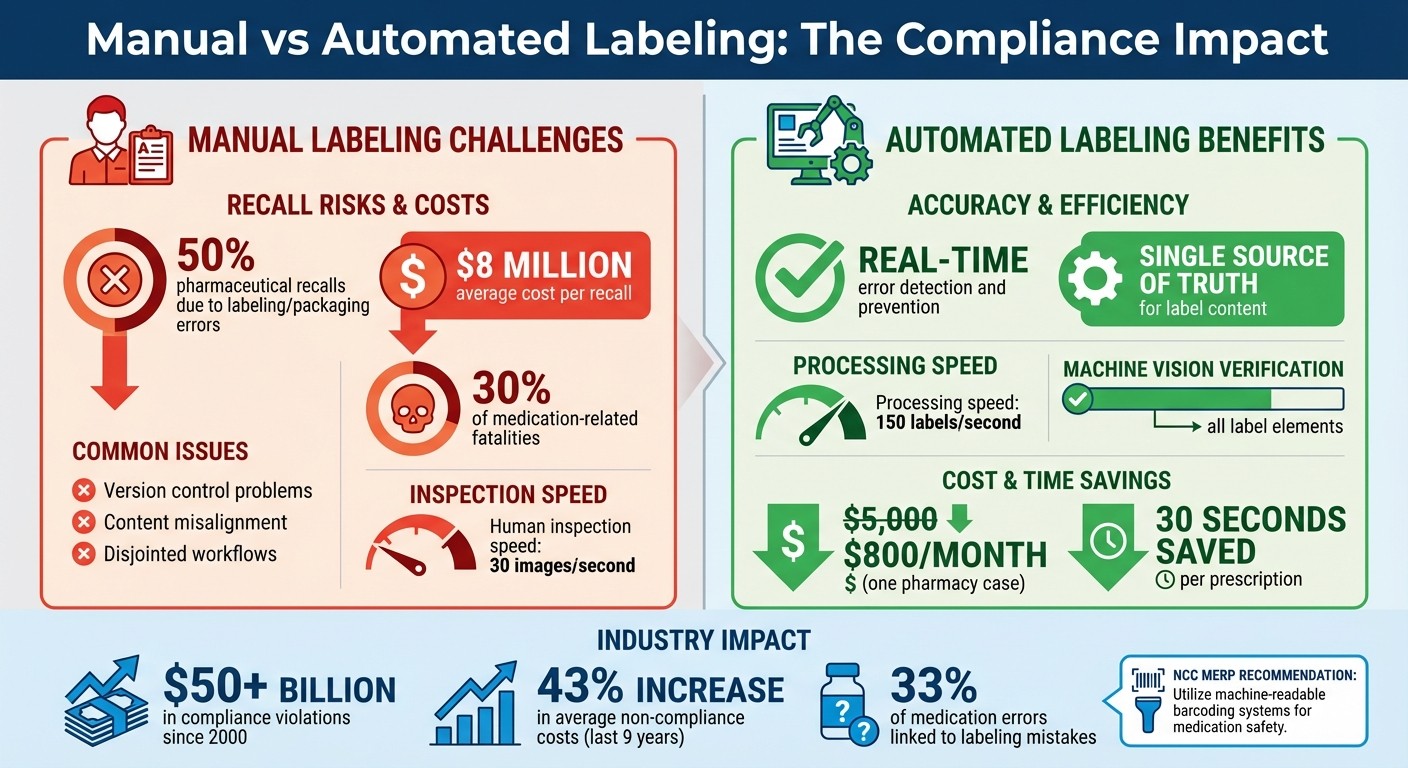
Automated labeling systems have a proven track record of minimizing errors, which are responsible for 33% of medication mistakes and 30% of related fatalities [16][19]. Considering that 50% of pharmaceutical recalls stem from labeling errors - each costing an average of $8 million [16][18] - it's clear that automated verification processes are crucial for safeguarding both financial stability and patient safety.
These systems use machine vision technology to meticulously verify every detail on a label, including ingredients, dosage, and directions, before it even reaches the packaging line [17]. Their precision far exceeds human capacity. While human inspectors can process about 30 images per second, modern rewinders handle up to 150 labels per second [17]. Automated platforms also excel at spotting minute discrepancies that would likely go unnoticed by the human eye, cross-referencing labels against predefined standards without fatigue or lapses in attention [16][17].
By reducing errors, these systems not only protect patients but also save pharmacies significant time and money.
Time and Cost Savings
Automation doesn't just enhance accuracy - it also streamlines operations. For instance, East Tallinn Central Hospital saw their output double, while the time required to administer medication dropped from 6 minutes to just 41 seconds per item, saving countless labor hours [20].
For 503A and 503B pharmacies, automation removes the tedious task of manually transcribing data from CPOE systems into pharmacy compounding systems [20]. By centralizing label management and eliminating manual processes, these systems ensure compliance with regulations while boosting workflow efficiency. Given that compliance violations in the pharmaceutical sector have cost over $50 billion since 2000 [16], investing in automated labeling systems is not just practical - it’s financially smart.
Adding Automated Labeling to Pharmacy Workflows
Working with EHR and Prescription Management Systems
Automated labeling systems are designed to integrate seamlessly with SCWMS, connecting to prescription management systems to ensure the safe preparation and verification of compounded sterile preparations. This integration relies on SPL, the HL7-approved standard, to electronically exchange product and facility data [4].
For 503A pharmacies, these systems pull patient prescription data directly from electronic health records, maintaining data integrity through ALCOA+ principles within the Quality Management System [21]. This ensures that every label corresponds to a valid prescription for a specific patient, meeting federal regulatory requirements [22].
On the other hand, 503B outsourcing facilities operate differently. Their systems are geared toward batch-level labeling and must adhere to Current Good Manufacturing Practice (cGMP) standards. This includes mandatory label statements like "This is a compounded drug" [22]. Additionally, these facilities need systems that can handle semiannual FDA electronic reporting, which occurs in June and December [24].
Because of these differences, the integration of automated labeling systems requires tailored workflow adjustments for 503A and 503B facilities.
Workflow Changes for 503A and 503B Pharmacies
To fully capitalize on automation, pharmacies must adapt their workflows accordingly. This means updating the Quality Management System with detailed SOPs for equipment verification and maintenance. Experts stress the importance of these updates to ensure the system operates effectively.
"The quality, safety, and appropriateness of the preparations remains the fiduciary responsibility of the dispensing pharmacy and pharmacist. This duty is not transferable" [23]
Martha M. Rumore, PharmD, Esq, MS, LLM, FAPhA
For 503A pharmacies, automated workflows must align with Master Formulation Records to ensure label accuracy [21]. The system should also prompt staff to document "medical necessity" when compounding a drug that mimics an existing commercially available product [23]. When sourcing from 503B facilities, 503A pharmacies generate and apply their own final dispensing labels without altering the original 503B product.
503B facilities, however, face more stringent requirements. Their automated systems must include at least 10 key elements on each drug label, such as the date compounded, expiration date, storage instructions, and MedWatch contact details (www.fda.gov/medwatch and 1-800-FDA-1088) [24]. Furthermore, these systems must be updated with accurate licensing and registration information for every state to which compounded drugs are shipped, as 503B facilities are required to register in each destination state [23].
Research Findings and Case Studies
Manual vs Automated Pharmacy Labeling: Error Rates and Compliance Comparison
Recent studies and case examples highlight how automation not only reduces manual errors but also ensures compliance with strict regulatory standards by maintaining accuracy in every label.
Manual vs. Automated Labeling Comparison
Labeling and packaging errors are a major issue in the pharmaceutical industry, accounting for about 50% of all product recalls, with each recall costing an average of $8 million. Beyond the financial impact, labeling mistakes contribute to 30% of fatalities linked to incorrect medication administration[16]. A stark example is the 2018 Robaxin recall, which underscores the serious risks of manual labeling failures.
Manual labeling processes often struggle with challenges like version control problems, content misalignment, and disjointed workflows[1]. Automated labeling systems solve these issues by creating a "single source of truth" for label content[1]. These systems cross-check labels against predefined standards in real time, detecting errors far more quickly than human operators. This proactive approach helps prevent mistakes before products hit the market[16]. The National Coordinating Council for Medication Error Reporting and Prevention (NCC MERP) even advocates for machine-readable systems, such as barcoding, to reduce errors during repackaging and administration[25].
"A centralized labeling function that owns and controls the end-to-end labeling process... would be the ideal state."
Justine Han, Managing Consultant, Red Nucleus[1]
The financial stakes are high. Since 2000, compliance violations in the pharmaceutical sector have surpassed $50 billion, with the average cost of non-compliance rising by 43% over the last nine years[16]. For high-volume operations, automation offers significant savings. For instance, automated systems can shave off 30 seconds per prescription during packaging and filling. One pharmacy reduced its monthly costs from $5,000 to $800 by upgrading to specialized mixing and labeling equipment, saving over $50,000 annually[16].
These findings set the stage for real-world examples from 503A and 503B pharmacies, showcasing how automation delivers measurable benefits.
Examples from 503A and 503B Pharmacies
Research from 503Pharma illustrates how both 503A and 503B facilities leverage automation to address human fatigue and the limitations of manual monitoring on high-speed production lines[26]. When integrated with Electronic Medication Administration Records (eMAR), these systems create a "closed-loop" process. A single barcode scan ensures the correct medication, dosage, and timing[27][28]. This approach not only aligns with USP 797 and USP 800 standards but also provides the robust traceability demanded during regulatory audits. Compared to manual processes, this system offers a higher level of accountability and compliance[1].
Conclusion
Automated labeling systems have become a cornerstone for 503A and 503B pharmacies navigating the intricate web of regulations. By offering a centralized, traceable framework, these systems align seamlessly with FDA requirements, USP standards, and international initiatives like ISO IDMP and Structured Product Labeling (SPL) [2][4]. As regulatory bodies continue pushing for digital-first compliance, automation has shifted from being a helpful tool to an absolute necessity.
The importance of automation goes far beyond staying compliant. Labeling errors are linked to 33% of medication mistakes and 30% of related fatalities [6], underscoring the role automation plays in protecting patient safety. For 503B outsourcing facilities, automated platforms simplify the complex processes of electronic drug product reporting and registration required by federal law [4]. At the same time, 503A pharmacies gain from standardized data exchange formats, ensuring consistency across state-level operations.
These systems also bring a much-needed boost to operational efficiency. By eliminating the fragmented workflows and version control issues that plague manual processes [1], automation supports real-time verification and maintains detailed audit trails. This not only reduces costs but also ensures strict adherence to regulatory guidelines. As global regulators continue adopting digital-first strategies [29], pharmacies leveraging automated labeling systems position themselves for stronger oversight and smoother operations, all while prioritizing safety and efficiency.
For compounding pharmacies committed to patient safety and regulatory compliance, automation isn't optional - it’s essential. Platforms like 503Pharma provide valuable educational tools to help facilities stay ahead of evolving requirements and implement best practices effectively. The time to embrace automation is now, as it’s the key to meeting today’s stringent compliance demands.
FAQs
How do automated labeling systems help pharmacies stay compliant and accurate?
Automated labeling systems are a key component in ensuring pharmacies maintain precision and stay compliant with regulations. By leveraging tools like barcode readers, machine vision, and electronic validation, these systems guarantee that labels are applied correctly and include accurate, complete, and easy-to-read information. This significantly minimizes the chances of human error, a frequent culprit behind mislabeling issues.
These systems also cross-check critical details such as barcodes, lot numbers, and expiration dates to ensure they meet regulatory requirements. Beyond accuracy, they streamline the entire labeling process, making it quicker and more dependable. By reducing errors and adhering to standards, automated labeling systems not only protect patient safety but also help pharmacies avoid expensive mistakes or potential product recalls.
What are the main differences in labeling requirements for 503A and 503B pharmacies?
The labeling requirements for 503A and 503B pharmacies differ significantly because of their distinct roles and regulatory obligations.
503A pharmacies prepare medications tailored for individual patients based on specific prescriptions. Their labels must comply with USP <795>/<797> guidelines and state regulations. These labels typically include details like the patient’s name, dosage instructions, and pharmacy information - ensuring the medication is both safe and accurately dispensed for personal use.
503B outsourcing facilities, however, produce medications in bulk for wider distribution. They must adhere to Current Good Manufacturing Practices (CGMP) alongside USP standards. Their labels are far more detailed, featuring batch or lot numbers, manufacturing and expiration dates, and comprehensive product information. This level of detail ensures traceability and meets strict regulatory standards.
In essence, 503A labels are centered around patient-specific clarity, while 503B labels emphasize compliance and traceability for large-scale operations.
How do automated systems fit into pharmacy workflows and existing technologies?
Automated systems fit smoothly into pharmacy workflows by serving as a centralized hub that links essential operations like robotic storage, dispensing, packaging, and inventory management. These systems collaborate with pharmacy management software to ensure medications are prepared and distributed with precision, cutting down on manual mistakes and boosting overall efficiency.
They also utilize tools such as label printers and barcode scanners to facilitate accurate labeling, verify patient information, and track medications effectively. At the same time, they help pharmacies meet regulatory requirements. By simplifying tasks and improving accuracy, automation has become a key component in modern pharmacy practices, enabling pharmacies to provide safer and more efficient care.
Download Now