Top 5 Benefits of Real-Time Inventory Tracking
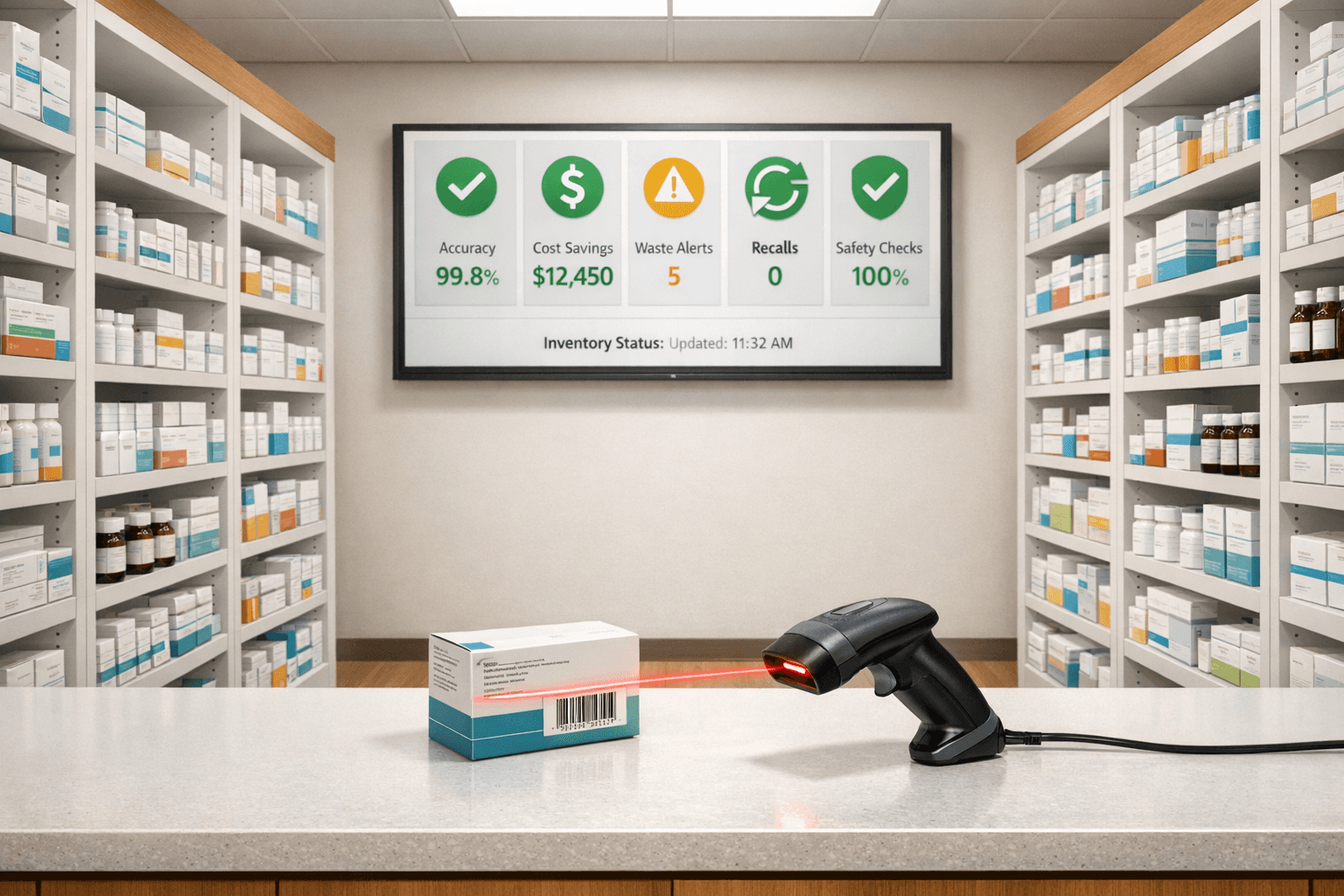
Real-time inventory tracking transforms how pharmacies manage stock. By using tools like barcode scanners, RFID tags, and IoT sensors, pharmacies can automatically monitor inventory levels, expiration dates, and recalls. This shift from manual processes to automated systems improves accuracy, reduces waste, and ensures compliance with regulations like the Drug Supply Chain Security Act (DSCSA). Here's a breakdown of the key benefits:
Improved Accuracy: Pharmacies report a 35% increase in inventory accuracy, minimizing errors and discrepancies between physical stock and records.
Lower Costs: Automation cuts labor costs by 30-40% and reduces medication waste by up to 30%.
Enhanced Patient Safety: Automated tracking prevents the use of expired or recalled drugs, ensuring timely access to medications.
Simplified Compliance: Systems streamline record-keeping and meet traceability requirements, saving time during audits.
Better Forecasting: Live data enables precise demand planning, reducing stockouts and excess inventory.
Real-time systems not only streamline pharmacy operations but also improve patient care and regulatory adherence. With over 90% of industry executives planning to adopt these tools, the future of inventory management is data-driven and efficient.
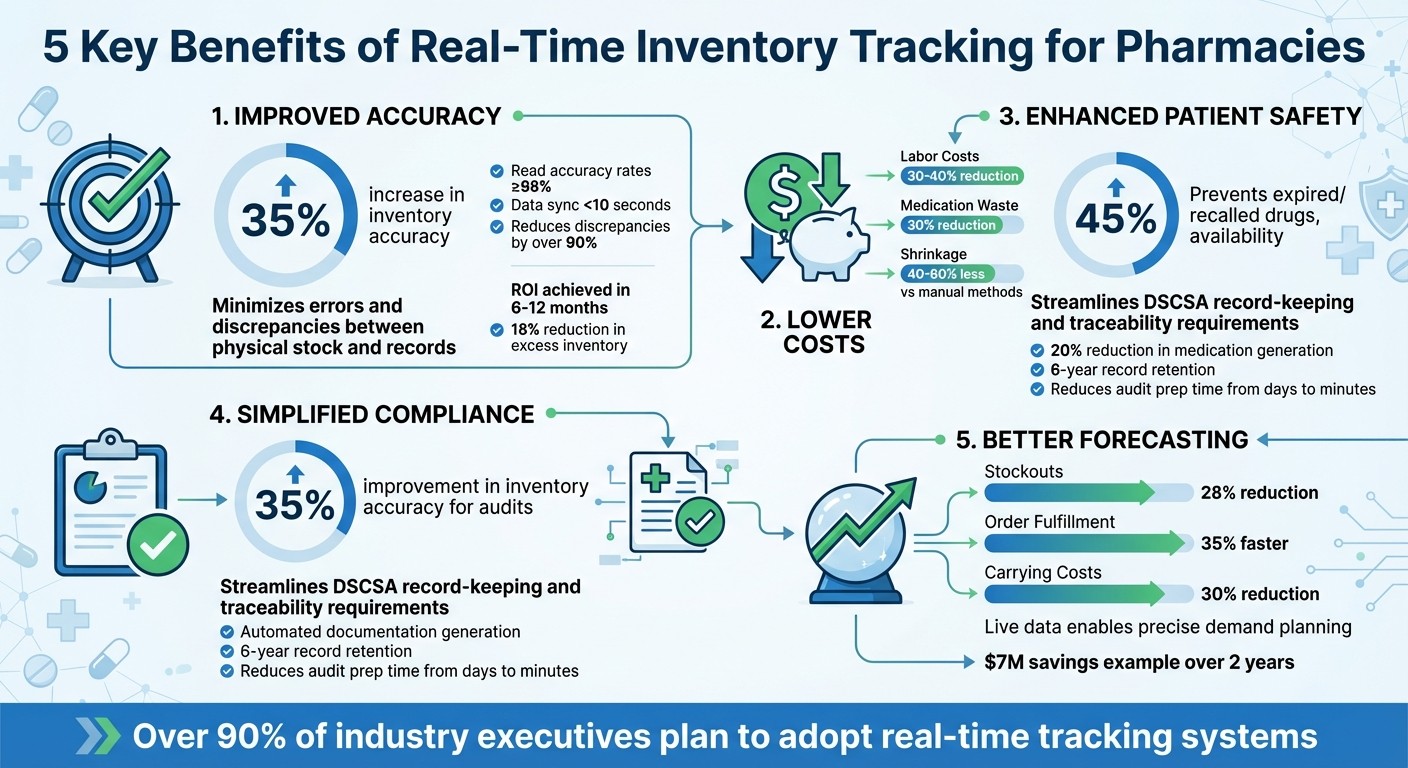
5 Key Benefits of Real-Time Inventory Tracking for Pharmacies
RxID Select™ Inventory Management Platform
Technology's Impact on Pharmacy Supply Chains
Over the past decade, the pharmaceutical supply chain has seen a dramatic transformation. The days of relying on manual counts, audits, and spreadsheets are fading. These outdated methods often left pharmacies with an incomplete picture of their inventory. Now, real-time tracking systems have redefined inventory management, turning it into a dynamic, live asset that updates continuously [2]. This shift has replaced static records with actionable, real-time data.
Modern systems now provide unit-level detail, which brings both efficiency and precision to the forefront. Unlike legacy systems that only captured aggregate quantities, today’s serialized tracking dives deeper, recording serial numbers, lot numbers, and expiration dates for each item [14]. This level of granularity allows pharmacies to locate recalled products quickly, eliminating the need for painstaking manual searches through entire batches.
The challenges of outdated systems are clear. A significant 60% of pharmaceutical executives admit that legacy systems hinder progress [13]. On top of that, 54% face difficulties integrating data due to siloed systems [13]. These inefficiencies have real consequences. For instance, errors occur in 52% of purchase orders, which often require an average of nine updates to fix [13]. By automating processes like three-way matching with real-time scanning, pharmacies can avoid these costly mistakes and save time [14].
Technology is also changing the game for cold chain management. IoT sensors now monitor temperature-sensitive medications, ensuring cold chain integrity - something manual logging simply couldn’t achieve [4][7]. Beyond that, compliance with regulations like the Drug Supply Chain Security Act (DSCSA) has become more manageable. Systems equipped with serialization features automatically generate the necessary documentation, reducing the burden of manual reporting [10][14]. Given that over 90% of a company’s supply chain involves external partners [13], seamless coordination through automation is no longer optional; it’s essential.
For compounding pharmacies navigating these advancements, platforms like 503Pharma offer valuable guidance. They provide resources to help pharmacies implement real-time tracking, meet compliance standards, and adopt best practices. This move from manual processes to automated systems doesn’t just streamline operations - it fundamentally enhances how pharmacies operate and care for their patients.
1. Better Operational Efficiency
Operational Impact
Real-time inventory tracking is reshaping how pharmacy staff manage their daily tasks. By scanning 2D barcodes, pharmacies automate the "three-way match" process - linking purchase orders, inbound products, and invoices. This eliminates time-consuming manual counting and visual inspections, freeing up hours of staff time.
With mobile, shop-floor transactions, staff can now handle inventory tasks - like receiving, picking, and moving products - right where the work happens. Wireless handheld devices replace the need for centralized data entry, making workflows more efficient. One global distributor saw impressive results after adopting real-time tracking: a 28% drop in stockouts and 35% faster order fulfillment [6]. And when staff can easily pinpoint the exact bin holding a specific lot number or expiration date, they save significant time locating products. This streamlined process ensures pharmacies can respond quickly and accurately in crucial moments.
Serialized data offers a "single source of truth" for pharmacies. This means that during recalls, they can immediately identify the location of affected lots and which patients received them. Real-time systems have been shown to deliver a 45% faster response time during product recalls [7].
The accuracy improvements are hard to ignore. High-performing systems boast read accuracy rates of ≥98%, with data synchronization happening in under 10 seconds [2]. Pharmacies using these systems have reduced discrepancies between physical stock and recorded inventory by over 90% [1]. This level of precision minimizes costly errors during dispensing and strengthens the overall reliability of the pharmacy supply chain.
"We can now act on issues before they happen, instead of chasing problems after the fact." - Head of Operations, Global Pharma Packager [8]
2. Lower Inventory Costs
Cost Savings
Real-time inventory tracking can significantly reduce costs by tackling one of the biggest expenses for pharmacies: carrying costs. With real-time visibility, pharmacies can fine-tune stock levels, cutting down on expenses related to storage, insurance, and tied-up capital [16].
Pharmacies using real-time tracking report 40% to 60% less shrinkage compared to manual inventory methods [16]. Emergency procurement costs also drop dramatically. Rush orders - often subject to 15% to 25% price premiums and shipping fees that can be 3 to 10 times higher - become far less frequent [16].
Labor costs are another area where savings shine. Automation reduces inventory-related labor expenses by 30% to 40% [16], allowing staff to focus more on patient care rather than manual stock management.
While initial implementation costs range from $1,000 to $5,000, with monthly fees between $100 and $500 [1], these expenses are usually recovered within 6 to 12 months through cost savings [16].
Automated expiration alerts add another layer of savings by preventing medications from expiring unused. Alerts - sent 30, 60, and 90 days before expiration - help pharmacies prioritize dispensing or return stock for credit. This proactive approach not only improves cash flow but also ensures better efficiency. Ultimately, these savings contribute to better patient care and help pharmacies maintain compliance with regulations, making real-time tracking an essential piece of the supply chain puzzle.
3. Better Patient Care
Patient-Centric Benefits
Real-time inventory tracking plays a direct role in improving patient outcomes by ensuring medications are available exactly when they’re needed. This means fewer delays in treatment and fewer trips to the pharmacy, which is especially critical for life-saving medications where even a short delay can have serious consequences [12][18]. Reliable access to essential medications is a key part of maintaining patient safety.
Patient safety also sees a boost through automated tracking of expiration dates and lot numbers. With the FDA reporting over 100,000 prescription errors annually [11], these systems help prevent patients from receiving expired or recalled medications. In cases of recalls, pharmacies can swiftly identify and remove affected batches - often in minutes rather than hours or days [7][19].
"A patient requiring life-saving medication should never face stock shortages. That is the reason inventory management is essential." - Samantha Huntsman, Pharmacy Technician Program Chair, Northwest Career College [18]
Integration with Electronic Health Records (EHR) further strengthens patient care by ensuring patients receive the correct medication [9][17]. This connectivity has been shown to reduce medication dispensing errors in hospitals by 20% [17]. Automated SMS alerts for refills and uncollected prescriptions also help keep patients informed and engaged [11]. Together, these features make real-time tracking a cornerstone of patient-focused care.
Additionally, automated inventory management frees up pharmacists to dedicate more time to clinical care. Gabriel Toribio, Central Purchasing Manager at PharMerica, noted that real-time tracking cut cycle count times from several hours to just 30 minutes [12]. With this added efficiency, pharmacists can spend more time counseling patients, administering vaccines, and performing other hands-on care activities instead of being bogged down by manual stock management [12][19].
4. Easier Regulatory Compliance
Regulatory Compliance Support
Real-time tracking has made it much simpler for pharmacies to meet compliance requirements set by the FDA and state regulations. For instance, the Drug Supply Chain Security Act (DSCSA) mandates pharmacies to maintain unit-level traceability and keep product documentation for six years [22][10]. Real-time systems automate this process by capturing essential serialization details - like GTIN, serial number, lot number, and expiration date - through barcode scanning. This automation eliminates the need for manual paperwork, reducing the risk of audit errors.
In April 2025, a pilot project led by Rajesh Karvannan successfully introduced RFXCEL traceability systems into five high-volume pharmacies. The results were striking: inventory accuracy improved by 35%, and recall response times dropped by 45% [7][8]. What once required days of manual effort to gather data now happens instantly, with no errors [8].
These systems go beyond DSCSA requirements. They also simplify controlled substance tracking by ensuring closed-loop reconciliation from the wholesaler to the patient’s bedside. This creates the precise records required by law [21].
"The technology provides the resources and real-time data that pharmacists need to remain compliant by detecting suspicious drug orders and preventing diversion." – Wendy Sellers, RPh from OrderInsite [21]
Additionally, these systems can flag orders that exceed DEA thresholds and maintain biometric access logs for high-value medications, ensuring a secure and reliable audit trail [20].
When it comes to recalls, real-time tracking allows pharmacies to quickly pinpoint and isolate affected lots. While operational speed is an advantage, the real benefit lies in the ability to handle regulatory documentation efficiently.
Temperature-sensitive biologics, like GLP-1 medications, also gain from real-time systems. IoT sensors integrated into these systems continuously monitor storage conditions, cutting audit preparation time from days to just minutes [8]. For example, in 2026, a global pharmaceutical company shipping Ozempic adopted Antares Vision Group's Cold Chain Technology. This move reduced temperature excursions across thousands of batches and significantly streamlined audit preparation [8]. Such monitoring not only meets compliance standards but also strengthens the overall regulatory framework of pharmacies.
By replacing manual logs with automated digital records, these systems eliminate common audit issues, such as misplaced prescriptions or missing signatures [21]. They automatically generate detailed, time-stamped records that meet FDA Current Good Manufacturing Practice (CGMP) requirements and state pharmacy board standards [20].
"We can now act on issues before they happen, instead of chasing problems after the fact." – Head of Operations, Global Pharma Packager [8]
5. More Accurate Demand Forecasting and Less Waste
Real-time inventory tracking doesn’t just improve efficiency and compliance - it also transforms demand forecasting and waste management.
Predictive Analytics and Waste Reduction
Instead of relying on outdated manual counts, real-time tracking introduces perpetual inventory - a system that continuously updates stock levels. This means pharmacies can see exactly what’s on their shelves at any given moment, rather than working off periodic counts that quickly become irrelevant [12].
"If physical inventory is your ATM balance, then perpetual inventory is your online bank account: a constantly updated picture of the current state of things along with all the information about how you got there." – Lindsay Tanner, Customer Advocate, SureCost [12]
With this live data, pharmacies can identify usage patterns, seasonal trends, and sudden spikes in demand as they happen [6,15]. Advanced platforms powered by AI take things further by analyzing both historical and real-time data to uncover trends that manual methods would miss [1,41]. These systems automatically adjust stock levels based on actual consumption and reorder requirements, ensuring the right amount of inventory is always on hand [12]. This real-time insight translates into real savings.
Cost Savings
The financial benefits are hard to ignore. Pharmacies using real-time inventory software have reduced medication waste by 30% in just six months [1]. Similarly, a global electronics distributor cut excess inventory by 18% within the same timeframe after adopting real-time tracking [6]. Decision intelligence tools have helped organizations lower inventory waste by 20–30% [24].
One example stands out: Between 2023 and 2025, a global drug manufacturer implemented Aera Decision Intelligence to automate processes like lead time tracking and data quality management. The result? $7 million in savings over two years and a projected long-term value of $50 million [24]. Real-time systems also eliminate "phantom inventory" - errors caused by misplaced or double-claimed stock - ensuring that forecasting models are based on accurate, up-to-date data [5].
Operational Impact
Modern predictive models now track lot numbers and expiration dates in real time, using FEFO (First Expired, First Out) logic to prioritize older stock. They can even reallocate inventory dynamically across locations to reduce waste. By factoring in real-time sales data and external influences like seasonal health trends, these platforms enable pharmacies to base purchasing decisions on current patient needs rather than outdated assumptions [1,41].
This approach creates a leaner supply chain, reducing the need for excessive safety stock and cutting carrying costs by up to 30% [15]. Pharmacies can now calculate precise inventory turnover ratios and lead times - key elements of reliable demand planning that were previously based on incomplete data [23]. Together, these improvements strengthen the supply chain and enhance overall efficiency.
Conclusion
Real-time inventory tracking is reshaping how pharmacies manage their supply chains. It improves inventory accuracy by 35%, speeds up recall responses by 45%, and reduces medication waste by 30% [7][1]. These advancements lead to safer patient care, lower operating costs, and better compliance with regulations.
Perpetual inventory systems offer pharmacies instant, precise insights into their stock levels. This level of visibility helps minimize stockouts, avoid expired medications, and respond quickly to supply chain disruptions. As a result, these systems drastically cut down on both shortages and excess inventory [6].
"Implementing real-time visibility turns inventory from a static balance-sheet number into a live operational asset, elevating service and reducing both cost and risk across the supply chain." – Umbrex [2]
For 503A and 503B compounding pharmacies, the stakes are even higher. Enhanced efficiency, cost savings, improved patient safety, automated compliance, and reduced waste all contribute to a solid foundation for growth. It's no surprise that over 90% of executives plan to adopt digital supply chain visibility solutions within the next year [3]. Together, these tools enable a more flexible and dependable pharmacy supply chain.
503Pharma provides tailored guidance and resources to help compounding pharmacies adopt real-time tracking systems effectively. From standardizing data to phased rollouts and staff training, their solutions address the specific needs of 503A and 503B facilities. By embracing these tools, pharmacies can streamline operations, improve patient care, and stay compliant while managing costs effectively.
FAQs
What’s the fastest way to start real-time inventory tracking in a pharmacy?
The fastest way to get started with real-time inventory tracking is by setting up an automated system using tools like barcode scanners, RFID tags, or IoT sensors. Begin by placing the necessary hardware in critical areas, such as storage and dispensing points, making sure everything is connected for instant data updates. After that, integrate software that delivers live inventory insights, helping you manage stock levels, receive reorder alerts, and monitor expiration dates - all while cutting down on manual work.
How does real-time tracking help with DSCSA traceability and audits?
Real-time tracking enhances DSCSA traceability and simplifies audits by providing precise, ongoing visibility into the movement and status of products. This capability helps meet serialization and lot-level traceability requirements, makes digital audits more efficient, and ensures quicker, more organized recalls - all of which strengthen the security of the supply chain.
What data should pharmacies track (serial, lot, expiration) for the biggest impact?
Pharmacies need to focus on keeping track of lot numbers and expiration dates to maintain product safety, follow regulations, and manage inventory efficiently. Keeping tabs on serial numbers is equally important for serialization and traceability. This helps combat counterfeiting and ensures recalls can be handled smoothly. By monitoring these details, pharmacies can achieve better oversight and build trust in their operations.
Download Now