How to Prevent Contamination in Sterile Compounding
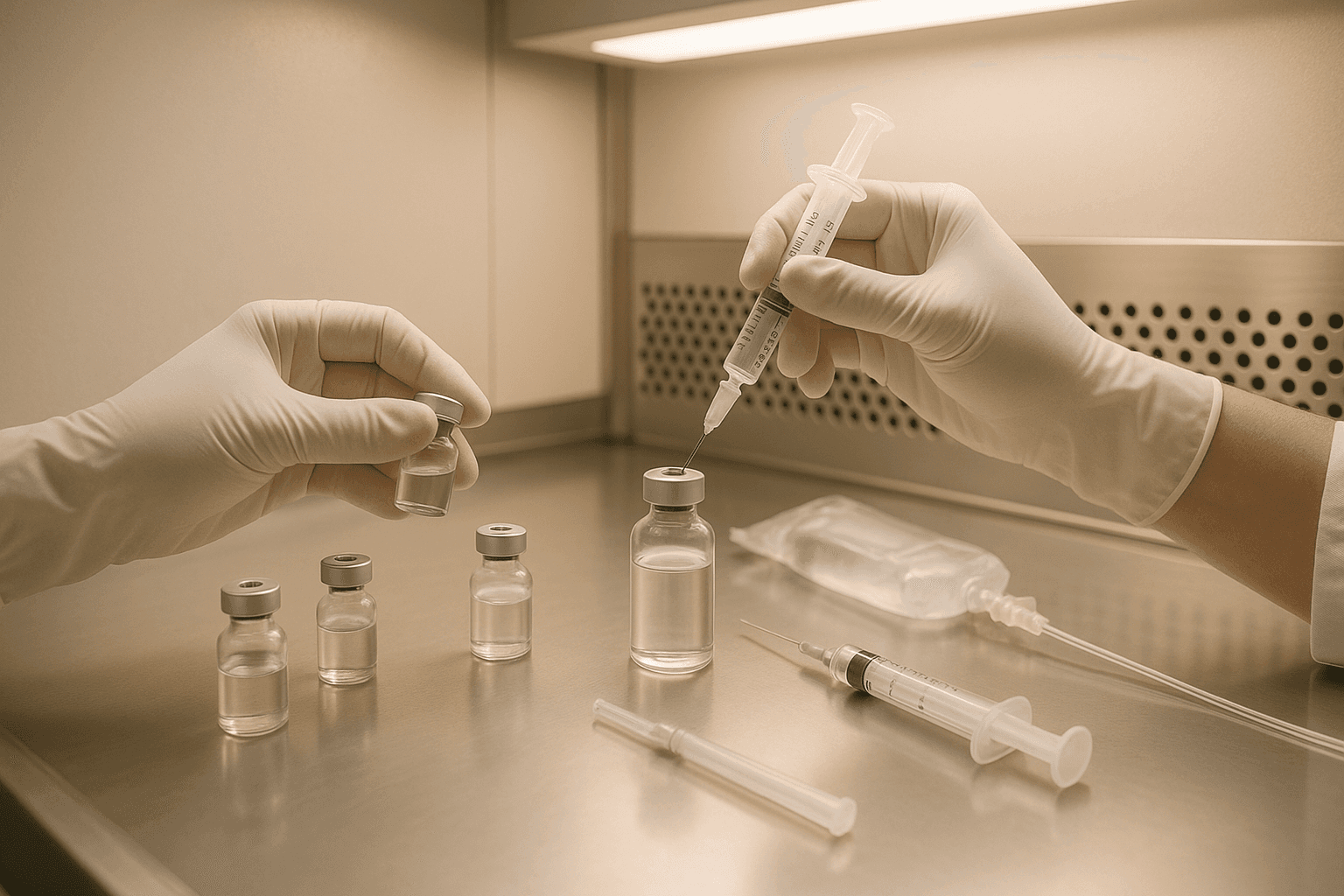
How to Prevent Contamination in Sterile Compounding
In sterile compounding, contamination can lead to severe patient risks, including infections, toxic reactions, and even death. Preventing contamination requires strict adherence to aseptic techniques, maintaining controlled environments, and proper staff training. Here's a concise guide to staying compliant and ensuring patient safety:
Types of Contamination: Microbial (bacteria/fungi), Chemical (cleaning agent residues), and Physical (particles like glass or dust).
Key Prevention Strategies:
Follow strict hand hygiene and garbing protocols.
Use ISO Class 5 spaces for compounding activities.
Disinfect surfaces, vials, and ampoules with 70% isopropyl alcohol.
Regularly monitor air and surfaces for particles and microbes.
Train staff every 6–12 months to maintain proficiency.
Facilities must comply with USP <797> and FDA cGMP standards, focusing on air quality, cleaning routines, and documentation. Non-compliance can result in patient harm, recalls, or shutdowns. By combining proper techniques, safe environments, and ongoing staff education, you can ensure sterile compounding meets the highest safety standards.
Common Contamination Risks in Sterile Compounding
Contamination risks in sterile compounding can jeopardize both product quality and patient safety. These risks typically fall into three main categories: microbial, chemical, and physical.
3 Types of Contamination: Microbial, Chemical, and Physical
Microbial contamination poses the greatest danger in sterile compounding. This occurs when bacteria, fungi, or viruses infiltrate a preparation, often due to lapses in hand hygiene, improper cleaning, or breaches in aseptic practices. For instance, failing to follow proper garbing procedures or using contaminated surfaces can introduce harmful microorganisms into the product [1] [3] [4].
Chemical contamination happens when residual cleaning agents, expired disinfectants, or cross-drug contact taint the preparation. If cleaning agents aren’t fully removed before compounding begins, they can compromise the safety and integrity of the product [2].
Physical contamination involves the presence of unwanted particles, such as glass fragments, rubber from vial stoppers, dust, or fibers from gowns. Issues like faulty equipment or improper handling of materials can lead to this type of contamination. Even tiny particles can cause significant harm when introduced into a patient’s body [1] [3] [4].
Contamination Type | Common Sources | Prevention Strategies |
|---|---|---|
Microbial | Poor technique, unclean surfaces | Strict hand hygiene, proper garbing, controlled environments |
Chemical | Residual cleaning agents, expired products | Careful cleaning agent management, monitoring expiration dates, thorough rinsing |
Physical | Broken ampoules, equipment issues | Proper material handling, regular equipment checks, visual inspections |
Understanding these risks highlights the importance of maintaining stringent aseptic protocols.
How Contamination Affects Patient Safety
Contamination in sterile compounding is particularly dangerous because these medications bypass the body’s natural defenses. Once introduced into the bloodstream, eyes, or other sensitive areas, contaminated products can expose patients to harmful substances [3] [4].
The consequences can include severe infections, toxic reactions, or even physical blockages caused by particulate matter. Contamination can also degrade the active ingredients in medications, reducing their effectiveness and therapeutic value. To minimize these risks, pharmacies must adhere to stringent standards such as USP <797> and FDA cGMP guidelines.
"Hand hygiene is the single most effective measure" to prevent microbial contamination in sterile compounding environments [5] [6].
Compliance Requirements for 503A and 503B Pharmacies
Given the serious risks contamination poses, compliance with established standards is critical.
503A pharmacies follow USP <797> for sterile compounding and USP <800> for handling hazardous drugs, focusing on patient-specific prescriptions. These standards cover everything from facility design and cleaning protocols to environmental monitoring and staff training. For example, compounding areas must have at least 12 air changes per hour and be recertified every six months [4] [5] [7].
503B outsourcing facilities face even stricter requirements since they produce medications on a larger scale for non-patient-specific use. In addition to meeting 503A standards, they must comply with FDA cGMP regulations. This includes more rigorous environmental monitoring, batch testing, and documentation to address the higher risks associated with mass production [4] [7].
Environmental monitoring is a cornerstone for both types of facilities. For instance, ISO 5 areas must continuously monitor airborne particles (0.5 micrometers or larger) to ensure sterility. Regular testing of air and surfaces, using methods like contact plates and swabs, further reduces contamination risks [4].
Staff training and competency assessments are equally crucial. Employees should receive training and evaluations every 6 to 12 months to ensure they are proficient in aseptic techniques and up-to-date on contamination prevention measures [5].
Non-compliance can lead to serious consequences, including patient harm, product recalls, regulatory fines, or even facility shutdowns [1] [3].
Educational resources like 503Pharma provide tools, guidelines, and insights tailored to help 503A and 503B pharmacies meet these complex requirements and prioritize patient safety.
Aseptic Technique: Core Practices to Prevent Contamination
Aseptic technique plays a critical role in preventing contamination during sterile compounding. These practices create essential barriers between potential contaminants and sterile preparations, ensuring both the integrity of the product and the safety of patients.
Hand Hygiene and Proper Garbing Steps
Start by removing all jewelry, watches, and accessories, as these can harbor microorganisms. Wash your hands thoroughly with soap and warm water for at least 30 seconds, paying close attention to areas like the spaces between fingers, nail beds, and wrists. Dry your hands with a low-lint towel, then apply an alcohol-based hand sanitizer.
Next, put on a low-lint gown that covers your torso and arms. Follow this with shoe covers, a head cover to contain all hair, a face mask, and sterile gloves that extend over the cuffs of the gown. Once garbed, avoid touching any non-sterile surfaces to maintain cleanliness.
Working Safely in Controlled Environments
Perform all compounding activities within Primary Engineering Controls, such as laminar flow workbenches or biological safety cabinets, which maintain unidirectional, HEPA-filtered airflow. Be mindful not to obstruct airflow patterns, as this can compromise the sterile environment.
Keep your work confined to an ISO Class 5 area to ensure the highest level of cleanliness. Avoid reaching over sterile fields or products, as this can disrupt airflow and introduce contaminants. Before beginning, organize your materials to reduce unnecessary movements that could stir up particles and compromise sterility.
When working with hazardous drugs in a biological safety cabinet, remember that the inward airflow is designed to protect both you and the product. Disinfect all materials entering the controlled environment to eliminate external contaminants. Once your workspace is set up, consistently decontaminate any items introduced into the sterile field.
Disinfecting Vials, Ampoules, and Syringes
Properly disinfecting materials is a key part of aseptic practice, ensuring that only sterile components are used in the preparation process.
Use sterile 70% isopropyl alcohol (IPA) to disinfect vial septa and ampoule necks. With a sterile alcohol prep pad, wipe these surfaces thoroughly, ensuring complete coverage. Allow the alcohol to air-dry for at least 30 seconds before proceeding.
For vials, disinfect the rubber septum immediately before inserting a needle and re-disinfect it between uses. When handling ampoules, clean the neck area where the ampoule will be opened to prevent contamination from glass particles or microorganisms.
Always follow single-use protocols - needles and syringes should never be reused, even if they appear clean. When withdrawing medication from a vial, insert the needle through the disinfected septum at a slight angle to avoid coring, which can create rubber fragments. Pull the syringe plunger back slowly to create negative pressure, reducing the risk of air entering the vial.
To prevent cross-contamination, change needles between different vials. This also minimizes the risk of transferring rubber particles into subsequent preparations. Dispose of needles using a one-handed scoop technique or a needle safety device to reduce the chance of needlestick injuries while maintaining sterility.
Document your aseptic practices using detailed checklists or sign-off procedures. Record specific actions, such as vial disinfection and the use of sterile equipment, to create a clear audit trail. This not only demonstrates compliance but also reinforces patient safety.
Environmental Controls: Keeping Your Compounding Area Sterile
Maintaining sterility in a compounding area hinges on effective environmental controls. These include facility design, cleaning routines, and monitoring systems, all working together with aseptic techniques to minimize contamination risks.
Cleanroom Design and Maintenance Requirements
The layout of your compounding area plays a significant role in preventing contamination. Sterile Compounding Areas (SCAs) should be clearly defined and located away from high-traffic or food preparation zones to reduce exposure to contaminants[5]. This separation acts as a protective barrier against environmental pollutants.
SCAs must maintain at least 12 air changes per hour under negative pressure to keep the environment sterile[5]. This steady airflow removes airborne particles and ensures that contaminants are directed away from the compounding area. Additionally, pressure differentials should be monitored continuously to maintain a cascade system where ISO Class 5 zones have the highest pressure, gradually decreasing in adjacent areas[4]. This setup ensures clean air flows outward, protecting the sterile field from potential breaches.
Routine recertification is essential to confirm that airflow patterns and particle counts meet the required standards[5]. These checks ensure that your environmental controls remain effective over time, creating a solid foundation for daily cleaning practices that preserve sterility.
Daily Cleaning and Disinfection Procedures
Daily cleaning protocols are critical in maintaining a sterile environment. All equipment dedicated to ISO Class 5 areas must be sterilized or thoroughly cleaned and disinfected between uses[2]. This includes items like stainless steel pumps and reusable tools that come into direct contact with sterile preparations.
Before introducing any products into SCAs, they must be disinfected appropriately[5]. The choice of cleaning agents should align with the ISO classification of the area. While sterile disinfectants may not be required for all ISO-classified zones, it's crucial to assess the risk of using nonsterile agents near ISO Class 5–7 areas[2]. A thoughtful risk assessment helps strike a balance between cost-effectiveness and contamination control.
Sporicidal agents should be used regularly in ISO Class 5 and other classified areas[2]. These agents target bacterial spores, which are among the most resilient forms of microbial contamination. Proper documentation of all cleaning and disinfecting activities is required to confirm compliance and identify any gaps in protocols[2].
Strict controls on cleaning agents are non-negotiable. This includes supplier approval, proper storage, accurate labeling, and monitoring expiration dates[2]. Using expired sterile cleaning or disinfecting agents is strictly prohibited, as they may lose effectiveness or even introduce contaminants.
Environmental Monitoring and Testing Programs
After implementing robust cleaning measures, environmental monitoring ensures any breaches in sterility are detected promptly. Both USP <797> and current Good Manufacturing Practice (cGMP) standards mandate environmental monitoring and quality assurance as essential components of sterile compounding operations[4].
Nonviable particle monitoring tracks airborne particles 0.5 micrometers or larger to confirm ISO classification compliance[4]. In ISO Class 5 zones, real-time particle counters should operate during compounding to detect any deviations immediately. For ISO Class 7 and 8 areas, monitoring can occur at scheduled intervals based on your facility's risk assessment.
Viable air and surface sampling identifies microbial contamination using specialized tools[4]. Air sampling collects microorganisms with impaction devices in cleanroom spaces, while surface sampling uses contact plates or swabs to test work surfaces and equipment. Samples are then incubated to measure colony-forming units (CFUs). Action and alert limits, set according to room classification, help distinguish acceptable levels from contamination requiring corrective action. Any breaches should be investigated and addressed immediately.
Pressure differential deviations must also be documented and resolved per standard operating procedures[4]. This documentation demonstrates your commitment to maintaining a sterile environment and provides valuable data for identifying trends or recurring issues.
Environmental monitoring programs should be customized to the ISO classifications and risk levels of specific compounding areas[4]. High-risk operations may demand more frequent monitoring, while lower-risk areas can follow standard schedules without compromising safety. For 503A and 503B pharmacies, resources like 503Pharma provide practical guidance on creating monitoring protocols tailored to your facility's needs and workload. These insights help ensure both regulatory compliance and operational efficiency.
Staff Training and Documentation Requirements
Trained staff are the final safeguard against contamination. Comprehensive training and meticulous record-keeping are essential for ensuring compliance and protecting patient safety. These efforts align perfectly with the environmental controls discussed earlier.
Training Staff and Testing Competency
Effective training starts with a strong foundation. Your program should thoroughly address USP <797> and <800> standards, proper use of personal protective equipment (PPE), hand hygiene, garbing protocols, and cleaning practices. Incorporating hands-on demonstrations and real-world case studies can help staff better understand potential risks.
Competency assessments should be conducted every 6–12 months to ensure skills remain sharp [1]. These evaluations might include direct observation, written exams, and practical tests such as media-fill exercises or gloved fingertip sampling. Be sure to document the assessment date, type, results, and any corrective actions taken. If deficiencies are identified, staff must undergo immediate retraining and re-evaluation before resuming compounding responsibilities.
Ongoing training is equally important. Whether it's due to procedural changes, the introduction of new equipment, or a contamination incident, staff must stay informed. Regulatory updates can also necessitate additional training to ensure compliance with the latest standards.
Building a Safety-Focused Work Culture
Training isn’t just about technical knowledge - it’s about cultivating a workplace that prioritizes safety. Regular in-service sessions can help your team stay current on regulatory changes, review contamination events, and openly discuss safety concerns. Educational resources, such as 503Pharma, can further expand knowledge and encourage continuous improvement.
Creating a culture where employees feel comfortable reporting near-misses or potential risks is critical. When staff understand how their vigilance directly impacts patient safety, they are more likely to uphold rigorous standards and follow protocols diligently.
Record-Keeping for Compliance and Tracking
Accurate documentation is a cornerstone of contamination prevention and regulatory readiness. Keep detailed and up-to-date records of training, competency assessments, cleaning logs, environmental monitoring data, incident reports, and standard operating procedures (SOPs).
Use either electronic systems or paper logs to track activities like training sessions, cleaning schedules, and monitoring tasks. Include timestamps and signatures for accountability. Assign unique identifiers to each compounded sterile preparation (CSP) and link them to the personnel involved to enhance traceability. Daily checklists can also ensure consistency by recording cleaned areas, products used, responsible team members, and completion times.
Regular audits and cross-checks can help identify and address documentation gaps before they lead to issues. For 503A pharmacies, compliance with USP <797> is mandatory, while 503B facilities must also adhere to FDA cGMP requirements [1]. Falling short of these standards can result in citations, product recalls, or even revocation of licensure.
Automated tools, like reminders for competency assessments and training renewals, can help manage challenges such as staff turnover or inconsistent training. Standardized materials and checklists further reinforce a safety-first culture and support ongoing compliance to protect patient care effectively.
Conclusion: Key Steps for Contamination Prevention
Preventing contamination in sterile compounding demands a well-rounded approach that integrates strict aseptic techniques, reliable environmental controls, and consistent staff training. Each of these elements works together to safeguard against microbial, chemical, and physical contaminants that could pose risks to patients.
It all begins with mastering aseptic techniques. This includes thoroughly washing hands, using sterile gloves, disinfecting vial septa and ampoule necks with 70% alcohol, and adhering to single-use protocols with precision [5] [6].
Environmental controls are the next layer of defense. A sterile workspace should meet key standards, such as maintaining at least 12 air changes per hour, using negative pressure, conducting continuous environmental monitoring, and completing cleanroom recertifications twice a year [5] [4].
Staff training ties everything together. Regular competency assessments, conducted every 6 to 12 months, help ensure that personnel consistently apply proper techniques. Documenting training sessions, cleaning activities, and monitoring results is essential for meeting USP <797> requirements and maintaining quality assurance [2] [4].
The stakes are high - contamination failures have resulted in severe patient infections and even fatalities, underscoring the importance of adhering to these protocols [8]. For 503A and 503B pharmacies looking for additional support, platforms like 503Pharma provide tailored resources to help navigate compliance challenges and prioritize patient safety.
Ultimately, contamination prevention isn’t about isolated actions but a system of interconnected practices that require constant diligence and improvement. By combining precise aseptic techniques, controlled environments, and ongoing staff training, sterile compounding can achieve the highest standards of safety for patients.
FAQs
What are the best practices for preventing contamination during sterile compounding?
Preventing contamination in sterile compounding demands strict attention to aseptic techniques and maintaining a controlled environment. The first step is ensuring all personnel adhere to proper gowning protocols. This includes wearing sterile gloves, gowns, masks, and shoe covers. Regular and thorough hand hygiene is equally important to limit microbial transfer.
Keeping the environment clean is another critical factor. Routinely clean and disinfect all surfaces, tools, and equipment involved in compounding. To minimize airborne contaminants, rely on HEPA-filtered airflow systems and conduct regular air quality checks to meet USP <797> standards. It’s also essential to inspect all materials and ingredients for any signs of compromise before use.
By implementing these measures, you can greatly reduce the risk of contamination and help safeguard the quality and safety of compounded medications.
How do USP <797> guidelines and FDA cGMP standards influence the operations of 503A and 503B pharmacies?
USP <797> and FDA cGMP standards are essential for safeguarding the safety and quality of sterile compounding in both 503A and 503B pharmacies. USP <797> focuses on defining best practices for sterile compounding, which include maintaining cleanroom environments, ensuring staff are properly trained, and using precise aseptic techniques to reduce contamination risks.
For 503A pharmacies, following USP <797> is crucial for protecting patient safety by adhering to strict compounding protocols. On the other hand, 503B outsourcing facilities must comply with FDA cGMP standards, which introduce additional layers of oversight. These include robust quality control systems, thorough batch testing, and detailed documentation to handle the complexities of large-scale medication production. Together, these regulations work to protect public health and uphold the quality of compounded medications.
What are the risks of not following contamination prevention protocols in sterile compounding?
Failing to follow contamination prevention protocols in sterile compounding can have severe repercussions. Contaminated medications can result in infections, harmful side effects, or even life-threatening complications for patients. Beyond endangering patient safety, such lapses can lead to regulatory penalties, legal actions, and a tarnished reputation for the pharmacy.
Adhering to established protocols - like maintaining proper hand hygiene, using aseptic techniques, and implementing strict environmental controls - plays a critical role in minimizing contamination risks. These practices help ensure that compounded medications remain safe and effective for patient use.
Download Now